Rediscover Imperial Vienna – Without Schönbrunn Palace

© Möbelmuseum Wien
Are you interested in the Austrian monarchy and the country’s imperial heritage? Schönbrunn Palace and its grounds are, of course, the first place to visit, but there is also imperial heritage to explore in Vienna and the surrounding area beyond the Habsburgs’ former summer residence.
Experience how the Habsburgs lived at the Furniture Museum, learn more about the life of the famous Empress Elisabeth at the Sisi Museum, or stroll through the splendor of bygone times at Schloss Hof, the former country estate and hunting lodge of Prince Eugene and later of Maria Theresa.
Furniture Museum Vienna
The Furniture Museum is not just a museum, but a unique collection, a storage facility, a restoration workshop, and a repository of nearly 300 years of furniture history. The oldest pieces date back to the time of Maria Theresa; in addition to Biedermeier and Viennese Modernism, furniture from the 20th and 21st centuries is also collected, displayed, and managed. The collection comprises approximately 165,000 objects, of which only about 6,000 are on display in the museum.
The History of the Furniture Museum
What began as the “monarchy’s junk room” evolved over the years into a prestigious exhibition. The museum’s history dates back to the time of Maria Theresa, who in 1747 appointed the first Court Furniture Inspector to manage and maintain the Court Furniture Depot. His duties also included transporting the furniture and furnishing the numerous residences of the monarchy. The Habsburg palaces were not inhabited year-round and were therefore not furnished year-round. The necessary furniture thus always had to be delivered and set up before the imperial family’s arrival and stored away when not in use—a logistical challenge! In 1908, the Hofmobiliendepot’s responsibilities were expanded to include the purchase of new furniture.
In 1901, the furniture storage facility was relocated to Mariahilferstrasse. In 1924, visitors were able to view the first pieces of furniture on display, and in 1998, the Hofmobiliendepot was transformed into a modern museum—today’s Furniture Museum.
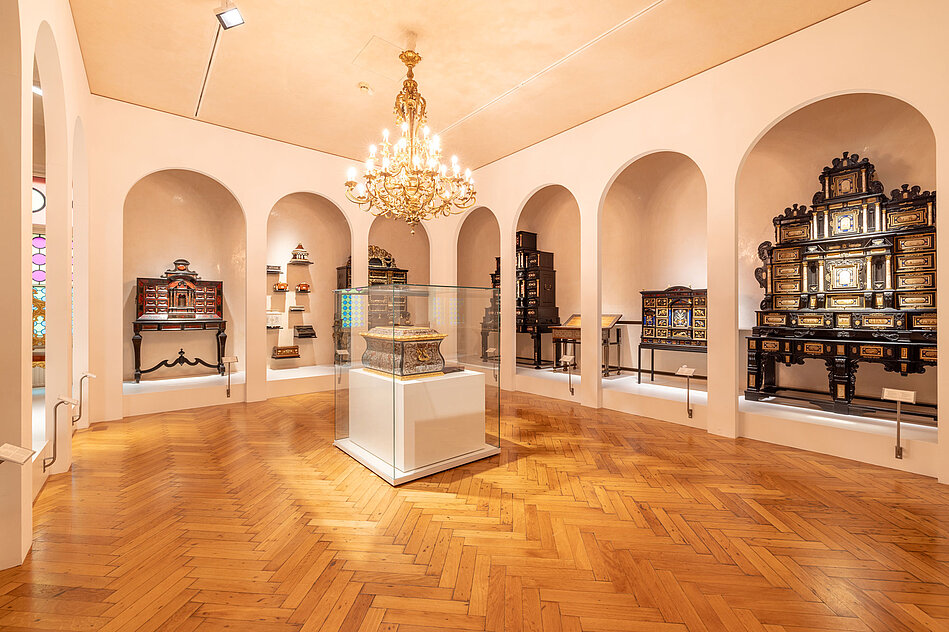
The Collections of the Furniture Museum
The Furniture Museum comprises roughly five collections, organized according to the eras from which the furniture originates.
The first collection from the time of Maria Theresa focuses on the Baroque, Rococo, and Neoclassical periods. The opulent and richly ornamented pieces of furniture came from the Habsburg family, including Maria Theresa and Prince Eugene. In this collection, visitors can admire Maria Theresa’s desk and Marie Antoinette’s secretary desk. Also noteworthy in this collection are the numerous East Asian designs, which Maria Theresa was particularly fond of.
The Empire-style furniture dates from the 19th century and was popular in the aristocratic households of Europe during the Napoleonic era. This style is characterized by opulent designs intended to represent the power of the residents and draws inspiration from Greek and Roman antiquity. Alongside the Empire style, a simpler, more homely style known as Biedermeier developed. However, this style was not “Bieder” (conventional); it was characterized by elegant designs in bold colors and fine woods. In the Furniture Museum, entire rooms in this style are presented in the so-called “Biedermeier booths.”
In the second half of the 19th century, a style known as Historicism emerged, characterized by the opulence of the Rococo, Baroque, and Renaissance periods. The excesses of this style can veer into the bizarre and gloomy, as demonstrated by the exhibited “Coat of Arms Hall,” furnished with antler-adorned pieces.
The final historical furniture collection focuses on design following the end of the monarchy. Here, opulence no longer set the tone; instead, simple designs emphasizing high functionality and comfort took center stage. Especially after the war years, the focus was on affordable, simple designs made from new materials. The collection also features several contemporary examples of furniture design from the year 2000 onward.
Another collection is particularly worth seeing for fans of the Sissi films. The Furniture Museum also exhibits film sets, posters, program booklets, and much more related to the three films starring Romy Schneider. This is because the Imperial Furniture Collection provided the furniture for the film shoots.
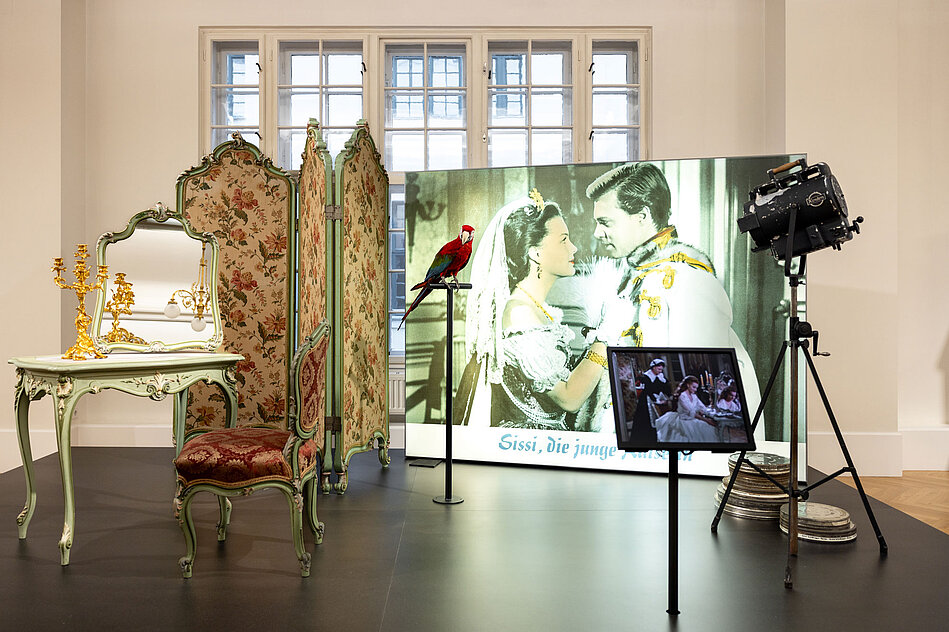
Visitor Services
Hours: Tuesday–Sunday (& holidays) 10:00 AM–5:00 PM
Price: €18 adults & €11 children (ages 6–18)
Address: Andreasgasse 7, 1070 Vienna
The museum is fully accessible. Wheelchairs are available for loan at the ticket office, and seating is provided throughout the exhibition for visitors.
Service dogs are permitted in the museum. Upon presentation of a valid ID, people with special needs receive a reduced admission price. Blind visitors and those in wheelchairs, with a corresponding notation on their ID, may bring one companion into the museum free of charge.
The museum offers food and drink courtesy of the Wiener Eiswerkstatt. In addition to the ice cream that gives the place its name, the menu also features specialty coffees, light bites, and refreshing beverages.
Exhibitions & Guided Tours at the Furniture Museum
In addition to the permanent exhibition showcasing the various collections, there are often special exhibitions on specific themes. These often focus in detail on specific periods or highlight particular designers and design workshops. This gives visitors even deeper insights into specific aspects of furniture design.
Guided tours of selected areas of the permanent exhibition, depending on the theme, are also offered, usually on Sundays. This allows visitors to learn even more about the exhibits and ask questions of the experts.
For interested visitors who would like more information about the furniture on display but do not have time for the guided tours, the free audio guide is a great way to get additional information. It is available in 9 languages and lasts approximately 70 minutes for the general museum tour and approximately 35 minutes for the exhibition on the Sissi films.
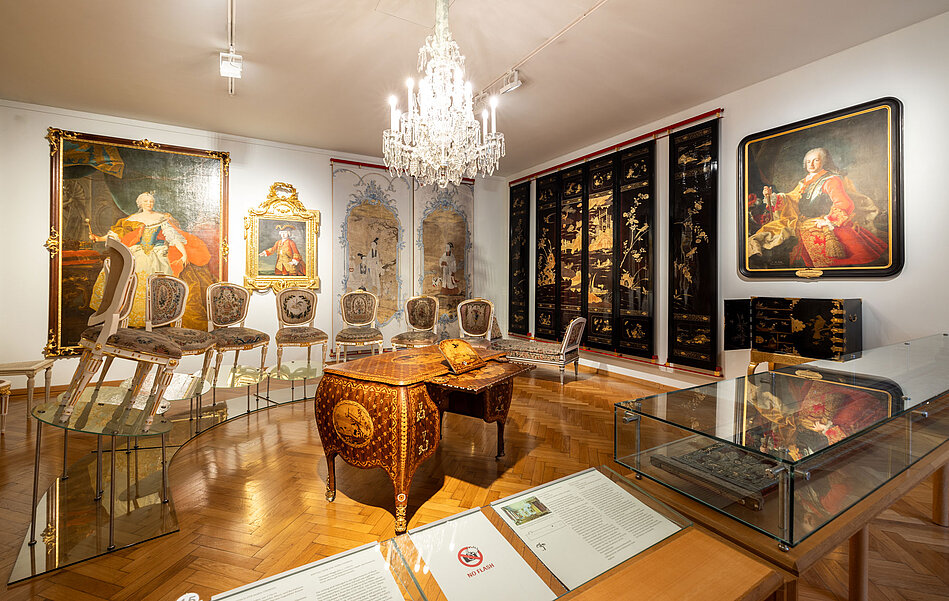
Sisi Museum
Another highlight of Vienna’s imperial heritage is the Sisi Museum, which explores the life, legacy, and personality of Empress Elisabeth “Sisi.” Located in the Hofburg, the Habsburgs’ winter residence, the museum offers not only an exhibition on Sisi but also access to the Imperial Apartments. Here, visitors can experience the living atmosphere of the former imperial couple, Sisi and Franz Josef I. The Sisi Museum explores numerous aspects of the empress’s life, showcasing her upbringing, life at court, her travels, her restlessness and escape from court life, her obsession with beauty, and her death. Numerous exhibits and works of art allow visitors to immerse themselves in Sisi’s life and legacy.
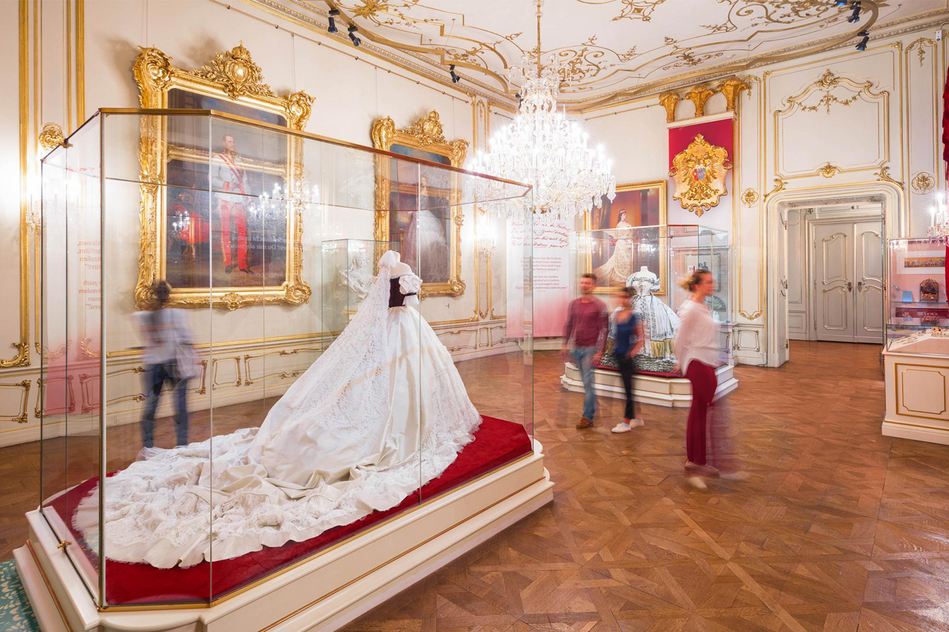
Schloss Hof
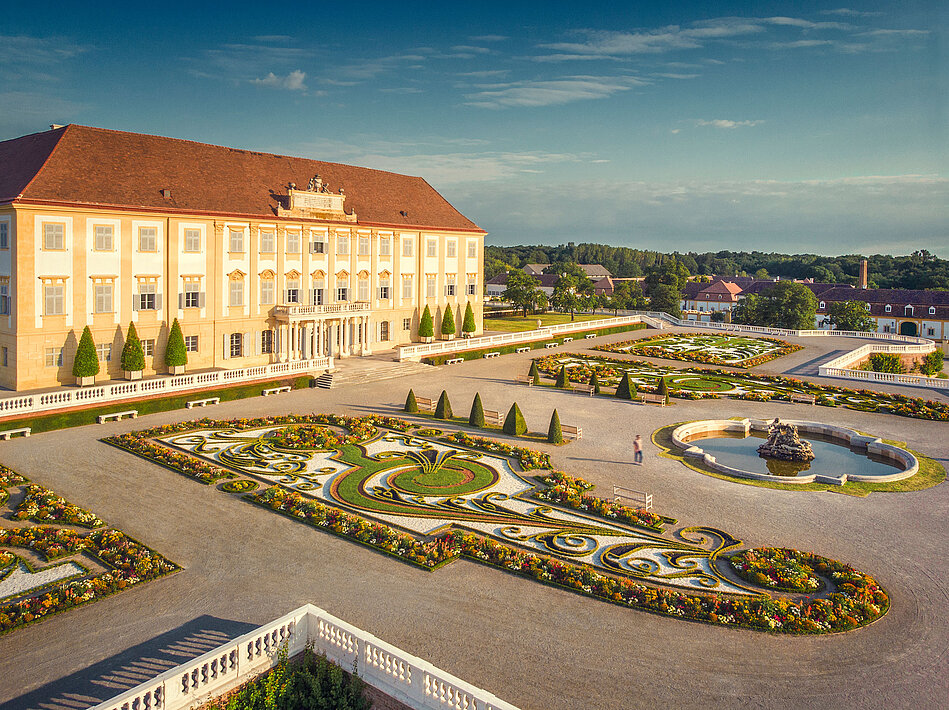
Outside Vienna in the Marchfeld region, there are several palaces that served as country estates for the Habsburgs. One of the most beautiful is Schloss Hof. The palace was formerly a farmstead and was acquired in the 1620s by Prince Eugene of Savoy, who converted it into a country estate. It was then that the interplay of palace, estate, and impressive gardens emerged, as can still be admired today. In 1755, the estate came into the possession of Maria Theresa, and the palace was rebuilt to its present appearance.
Today, visitors to the castle can experience the lifestyle of the 18th-century nobility and learn many interesting facts about its former residents.
The French-style garden spans seven terraces and offers a unique ensemble of plants, fountains, and sculptures. The castle’s estate once served to supply the castle. Today’s visitors can also immerse themselves in the functions of the farm in the 18th century, as the old bakery, workshops, and stables are open to the public. Numerous farm animals truly bring the farm to life and delight visitors of all ages.
The imperial legacy of the Habsburgs is omnipresent in Vienna, from the buildings along the Ringstrasse to palaces and various museums. And, of course, this legacy doesn’t end at the city limits; it extends to many locations outside the city and even into other countries. The attractions featured here are just a small selection of the many opportunities for imperial experiences during your visit to Vienna. The Furniture Museum lets you delve deep into the Habsburgs’ history of living, the Sisi Museum brings the former empress closer to you as a person, and Schloss Hof allows you to stroll through an impressive garden and experience 18th-century life.
We hope you have a wonderful time and gain many interesting new insights as you explore in the footsteps of the Habsburgs!